
Does bentonite cat litter have a uniform particle size?
As a supplier of bentonite cat litter, I've encountered numerous inquiries from customers about the particle size of our product. This topic is not only a matter of curiosity but also has significant implications for the performance and user experience of the cat litter. In this blog post, I'll delve into the question of whether bentonite cat litter has a uniform particle size, exploring the factors that influence it and its impact on the product's quality.
Understanding Bentonite Cat Litter
Before we discuss particle size, let's briefly understand what bentonite cat litter is. Bentonite is a type of clay formed from volcanic ash. It has excellent absorbent properties, which make it a popular choice for cat litter. When a cat urinates on bentonite cat litter, the clay clumps together, making it easy to scoop out the soiled litter and keep the litter box clean.
The Concept of Uniform Particle Size
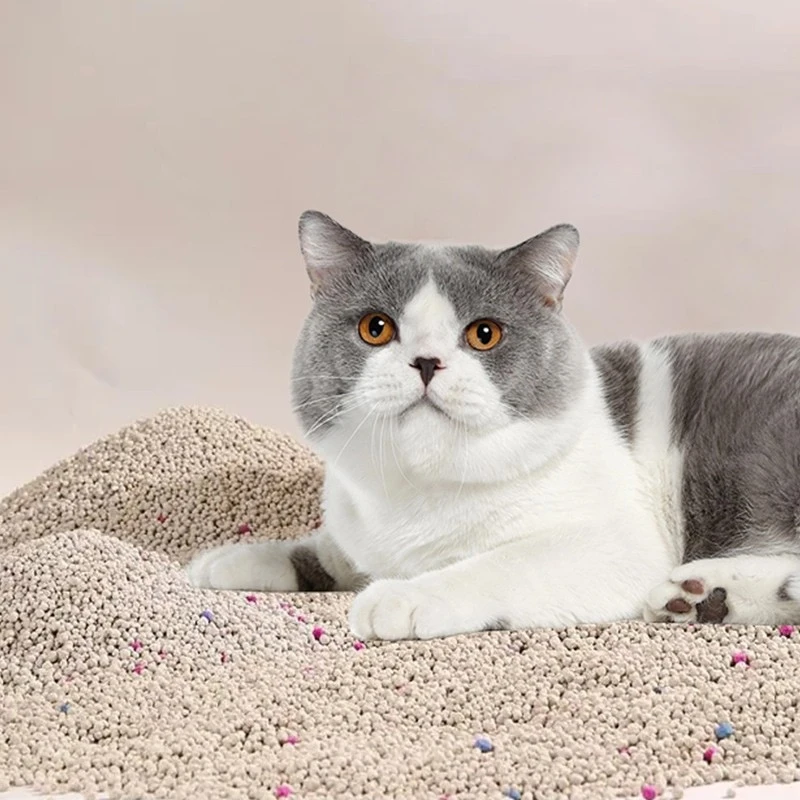
A uniform particle size means that the majority of the cat litter particles are of similar size. In an ideal situation, all particles would have exactly the same dimensions. However, achieving absolute uniformity is nearly impossible in the real - world manufacturing process.
Factors Affecting Particle Size Uniformity
Mining and Raw Material Variability
The first factor that affects the particle size of bentonite cat litter is the source of the bentonite clay. Bentonite deposits vary in their composition and physical properties from one location to another. When we mine the clay, the natural variability in the deposit can result in different particle sizes. Some areas of the deposit may have larger chunks of clay, while others may have finer particles.
Manufacturing Process
The manufacturing process also plays a crucial role in determining the particle size of the cat litter. The process typically involves crushing, grinding, and sieving the raw bentonite clay. During the crushing and grinding stages, the equipment used can influence the size distribution of the particles. For example, if the grinding mill is not properly calibrated, it may produce a wider range of particle sizes.
The sieving process is designed to separate the particles based on size. However, the efficiency of the sieving equipment can vary. Some small particles may pass through the sieves along with the larger ones, or some larger particles may get stuck in the sieves, leading to a less - than - uniform final product.
Quality Control Measures
Our company, like other reputable bentonite cat litter suppliers, has strict quality control measures in place. We regularly test the particle size distribution of our cat litter to ensure that it meets our standards. However, despite these efforts, there is always a small degree of variation. This is because quality control is a sampling - based process, and it's impossible to test every single particle in a large batch of cat litter.
Impact of Particle Size on Cat Litter Performance
Absorbency
The particle size of bentonite cat litter can have a significant impact on its absorbency. Smaller particles generally have a larger surface area, which means they can absorb more liquid. However, if the particles are too small, they may clump together too tightly, preventing the liquid from reaching the inner layers of the litter. On the other hand, larger particles may not absorb as quickly, but they can provide better air circulation within the litter box, which can help reduce odor.
Clumping Ability
The clumping ability of bentonite cat litter is also affected by particle size. A more uniform particle size can lead to better clumping. When the particles are of similar size, they can pack together more tightly when they come into contact with liquid, forming stronger and more cohesive clumps. This makes it easier to scoop out the soiled litter without leaving behind any residue.
Tracking
Particle size also affects tracking, which is the amount of cat litter that gets carried out of the litter box by the cat's paws. Smaller particles are more likely to stick to the cat's paws and be tracked around the house. Larger particles are less likely to be tracked, but if they are too large, they may be uncomfortable for the cat to walk on.
Our Approach to Particle Size
At our company, we strive to achieve the best possible particle size uniformity for our bentonite cat litter. We carefully select our raw materials from high - quality bentonite deposits. Our manufacturing process is continuously optimized to ensure that the crushing, grinding, and sieving steps are as precise as possible.
We also invest in state - of - the - art quality control equipment. Our laboratory technicians regularly test samples from each batch of cat litter using advanced particle size analyzers. This allows us to detect any deviations from our desired particle size range and make adjustments to the manufacturing process if necessary.
Conclusion
In conclusion, while it's difficult to achieve a perfectly uniform particle size in bentonite cat litter, we are committed to minimizing the variation as much as possible. Our goal is to provide a product that offers excellent absorbency, clumping ability, and minimal tracking.
If you are a pet store owner, a distributor, or an individual looking for high - quality bentonite cat litter, we encourage you to reach out to us for a purchase negotiation. We offer competitive prices, reliable supply, and excellent customer service. You can learn more about our Bentonite Clay Cat Litter on our website.

References
- "The Science of Cat Litter: Understanding Absorbency and Clumping", Journal of Pet Care Science, Vol. 12, Issue 3, 2020
- "Bentonite Clay: Properties and Applications", Clay Minerals Society Monograph, 2018
- "Quality Control in Cat Litter Manufacturing", International Journal of Pet Product Manufacturing, Vol. 8, Issue 1, 2021