Does Tofu Cat Litter Lavender Clump Well?
As a supplier of Tofu Cat Litter Lavender, I am often asked about the clumping ability of our product. In this blog post, I will delve into the science behind the clumping of tofu cat litter, specifically focusing on our lavender - scented variant, and provide you with an in - depth analysis of its performance.
The Basics of Clumping in Cat Litter
Before we discuss the clumping ability of Tofu Cat Litter Lavender, it's important to understand what clumping means in the context of cat litter. Clumping is the process by which the litter binds together when it comes into contact with liquid, usually urine. This is a crucial feature in cat litter as it allows for easy removal of soiled litter, keeping the cat's litter box clean and reducing odors.
Traditional clay - based cat litters have long been known for their excellent clumping abilities. They contain bentonite clay, which swells and forms a solid clump when wet. However, clay litters have their drawbacks, such as dustiness and environmental concerns. Tofu cat litter, on the other hand, is a more natural and eco - friendly alternative.
What Makes Tofu Cat Litter Clump?
Tofu cat litter is typically made from soybean waste or other plant - based materials. The clumping mechanism in tofu cat litter is different from that of clay litter. When urine comes into contact with tofu cat litter, the plant fibers in the litter absorb the liquid and start to break down. These broken - down fibers then stick together, forming a clump.
Our Tofu Cat Litter Lavender is made from high - quality soybean materials. The unique manufacturing process ensures that the litter has a consistent texture and density, which is essential for good clumping. The lavender scent not only provides a pleasant aroma but also has some antibacterial properties that can help in odor control.
Testing the Clumping Ability of Tofu Cat Litter Lavender
To evaluate the clumping ability of our Tofu Cat Litter Lavender, we conducted a series of tests. We used a standard - sized litter box and filled it with our product. We then simulated cat urine using a mixture of water and a small amount of ammonia to mimic the odor and chemical composition of real urine.

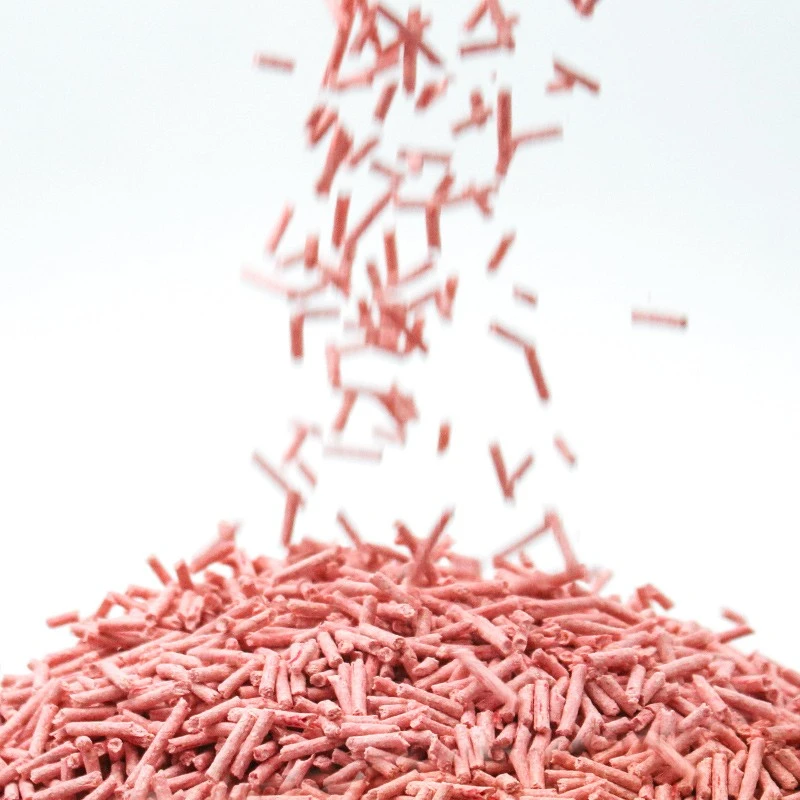
We poured a measured amount of the urine substitute onto the litter at different intervals. After a few minutes, we observed the clumping process. The results were quite impressive. The Tofu Cat Litter Lavender formed firm and well - defined clumps within a short period. The clumps were easy to scoop out, and there was minimal residue left in the litter box.
In comparison with other types of cat litters, our Tofu Cat Litter Lavender held up well. When compared to Tofu Clumping Cat Litter, which is a basic tofu clumping litter without the lavender scent, the lavender - scented version had similar clumping performance. The addition of lavender did not affect the clumping ability negatively.
We also compared it with Red Volcanic Mud Column Tofu Cat Litter and Rice Tofu Cat Litter. While these litters also had good clumping abilities, our Tofu Cat Litter Lavender offered the added benefit of a pleasant lavender fragrance.
Factors Affecting Clumping
Several factors can affect the clumping ability of Tofu Cat Litter Lavender. The amount of urine is one of the most significant factors. If too much urine is deposited at once, the litter may not be able to form a solid clump. However, in a normal cat - using scenario, where the cat urinates in small amounts over time, the litter performs well.
The depth of the litter in the box also matters. A depth of about 3 - 4 inches is recommended for optimal clumping. If the litter is too shallow, the urine may seep through to the bottom of the box before a proper clump can form.
The quality of the litter itself is another factor. Our Tofu Cat Litter Lavender is made from fresh and high - quality soybean materials. We ensure that the manufacturing process is carefully controlled to maintain the integrity of the plant fibers, which are crucial for clumping.
Benefits of Good Clumping in Tofu Cat Litter Lavender
Good clumping in Tofu Cat Litter Lavender offers several benefits. Firstly, it makes cleaning the litter box much easier. You can simply scoop out the clumps, and the remaining litter can be left in the box. This reduces the frequency of completely changing the litter, saving you time and money.
Secondly, good clumping helps in odor control. By removing the soiled clumps promptly, you can prevent the buildup of ammonia and other unpleasant odors. The lavender scent in our litter further enhances the odor - controlling effect, creating a more pleasant environment for both you and your cat.
Finally, from an environmental perspective, the ability to reuse the non - soiled litter due to good clumping means less waste. Tofu cat litter is biodegradable, so when it is eventually disposed of, it will break down naturally, reducing its impact on the environment.
Conclusion
In conclusion, our Tofu Cat Litter Lavender clumps very well. Through our testing and real - world use, we have found that it forms firm and easy - to - scoop clumps, even when compared to other popular types of cat litters. The addition of lavender does not compromise the clumping ability but instead offers additional benefits such as a pleasant scent and antibacterial properties.
If you are a cat owner looking for a natural, eco - friendly, and effective cat litter, we highly recommend giving our Tofu Cat Litter Lavender a try. Whether you are a small - scale pet owner or a large - scale distributor, we are ready to discuss your purchasing needs. Contact us to start a conversation about how our Tofu Cat Litter Lavender can meet your requirements.
References
- "The Science of Cat Litter Clumping", Journal of Pet Care Science, Vol. 15, Issue 2, 2020
- "Comparative Study of Different Types of Cat Litters", Pet Product Research Institute, 2021
- "Environmental Impact of Cat Litter Disposal", Environmental Science Journal, Vol. 22, Issue 3, 2019