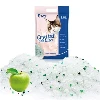
Silica gel cat litter has become a popular choice among cat owners due to its excellent odor - control and clumping properties. As a silica gel cat litter supplier, I am often asked about the potential impact of this type of cat litter on a cat's respiratory system. In this blog, we will explore the scientific aspects of how silica gel cat litter can affect a cat's respiratory health.
Understanding Silica Gel Cat Litter
Silica gel cat litter is typically made from porous silica gel beads. These beads are highly absorbent, which helps in quickly soaking up urine and controlling odors. There are different types of silica gel cat litter available on the market, such as Silicone Cat Litter, Apple Silica Cat Litter, and PH Silica Cat Litter. Each type has its own unique features, but they all share the common characteristic of being made from silica gel.
The Respiratory System of Cats
Before delving into how silica gel cat litter affects a cat's respiratory system, it's important to understand the basic structure and function of a cat's respiratory system. A cat's respiratory system consists of the nose, pharynx, larynx, trachea, bronchi, and lungs. The nose filters, warms, and moistens the air as it enters the body. The trachea and bronchi act as passageways for air to reach the lungs, where gas exchange occurs.


Potential Positive Effects on the Respiratory System
One of the main advantages of silica gel cat litter in relation to a cat's respiratory system is its low - dust nature. Compared to traditional clay - based cat litters, silica gel cat litter produces significantly less dust. Dust can be a major irritant to a cat's respiratory system. When a cat inhales dust particles, it can cause irritation to the nasal passages, trachea, and lungs. This irritation may lead to symptoms such as sneezing, coughing, and wheezing.
The low - dust property of silica gel cat litter reduces the risk of these respiratory irritations. By minimizing the amount of dust in the air around the litter box, silica gel cat litter helps maintain a cleaner and healthier environment for the cat to breathe. Additionally, the excellent odor - control properties of silica gel cat litter can also have a positive impact on a cat's respiratory comfort. Strong odors can be a source of stress for cats and may even cause respiratory discomfort. Silica gel cat litter effectively traps and neutralizes odors, creating a more pleasant and less irritating environment for the cat.
Potential Negative Effects on the Respiratory System
While silica gel cat litter has many benefits, there are also some potential negative effects on a cat's respiratory system. Although the dust levels are generally low, there is still a possibility of some fine dust particles being generated, especially when the cat digs in the litter box or when the litter is being poured or replaced.
If a cat inhales these fine silica dust particles, it can potentially cause problems in the respiratory system. Inhaled silica dust can accumulate in the lungs over time. In humans, long - term exposure to high levels of silica dust can lead to a condition called silicosis, which is characterized by the formation of scar tissue in the lungs. While the risk of silicosis in cats is much lower due to the relatively low levels of dust exposure, it is still a concern.
Another potential issue is that some cats may be allergic to silica gel. Allergic reactions can manifest as respiratory symptoms such as sneezing, coughing, and difficulty breathing. If a cat shows signs of an allergic reaction after being exposed to silica gel cat litter, it is important to discontinue use immediately and consult a veterinarian.
Minimizing the Risks
As a silica gel cat litter supplier, we are committed to ensuring the safety and well - being of cats. To minimize the potential negative effects on a cat's respiratory system, we recommend the following:
- Choose high - quality silica gel cat litter: High - quality products are often designed to have even lower dust levels. Look for cat litter that is specifically labeled as low - dust or dust - free.
- Keep the litter box clean: Regularly scoop out waste and replace the litter as needed. A clean litter box reduces the chances of dust being kicked up and also helps maintain good air quality around the box.
- Provide proper ventilation: Make sure the area where the litter box is located is well - ventilated. This helps to disperse any dust or odors that may be present.
- Monitor your cat's health: Pay attention to any changes in your cat's respiratory behavior, such as increased sneezing, coughing, or wheezing. If you notice any unusual symptoms, consult a veterinarian.
Conclusion
Silica gel cat litter can have both positive and negative effects on a cat's respiratory system. On one hand, its low - dust and odor - control properties can contribute to a healthier respiratory environment for cats. On the other hand, there is a potential risk of dust inhalation and allergic reactions. By choosing high - quality products, maintaining a clean litter box, providing proper ventilation, and monitoring your cat's health, you can minimize the risks and ensure that your cat enjoys a comfortable and healthy living environment.
If you are interested in purchasing high - quality silica gel cat litter for your feline friend, we invite you to contact us for more information and to discuss your specific needs. We are dedicated to providing the best products and services to ensure the well - being of your cats.
References
- "Respiratory System in Cats" - Veterinary Medicine Textbook
- "Effects of Dust on Animal Respiratory Health" - Journal of Animal Science and Health